
Understanding Marketing Funnels
Streamline and Optimize Your Sales Funnel
to Nurture Leads into Customers
HD Marketing Funnel Strategy
Optimize each stage of your customer journey with our tailored funnel strategies.
From awareness to conversion, we streamline your funnel to ensure your customers’ journey is seamless and effective, maximizing results.
Funnel Analysis
Review and assess your existing funnel, identifying bottlenecks and opportunities for improvement.
Funnel Design
Create a custom funnel tailored to your business goals by implementing strategies to nurture leads and drive conversions.
Funnel Optimization
Continuously refine the funnel based on performance data by A/B test ing elements for optimized results.
Start Building Your Funnel
Ready to Build Your HD Marketing Funnels?
It’s time to optimize your sales funnel and increase conversions.
Quick Links
What is a Marketing Funnel?
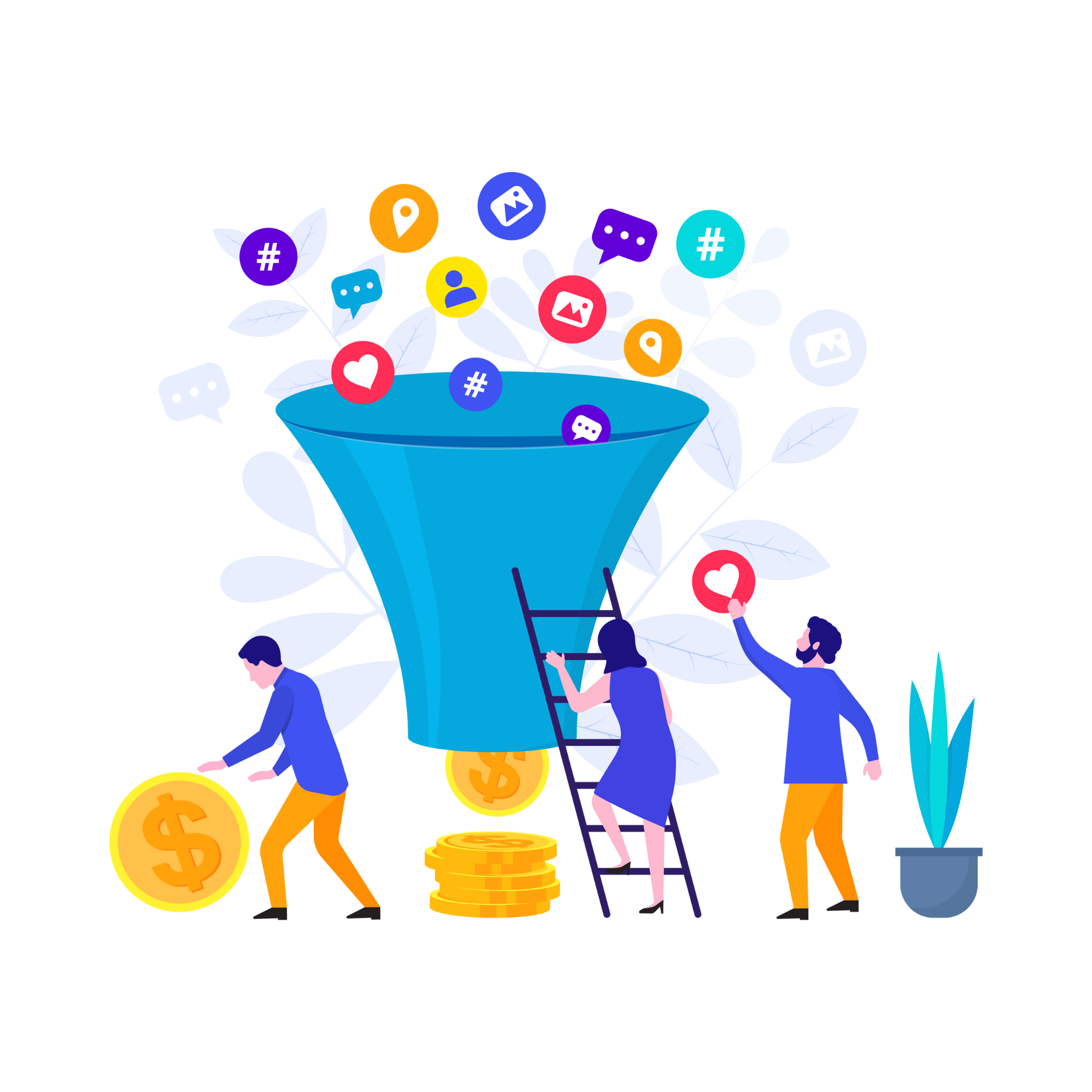
A marketing funnel is a strategic framework that visualizes the customer journey from initial awareness of your brand to final conversion and beyond. The funnel metaphor reflects how a large number of potential customers enter at the top, and through each progressive stage, a smaller percentage moves forward until they become paying customers at the bottom.
This model helps businesses understand and optimize each touchpoint in the customer journey, ensuring that prospects receive the right message at the right time to move them closer to conversion.
The Traditional Funnel Stages
Awareness (Top of Funnel – TOFU)
At this stage, potential customers first become aware of their problem or need, and discover that your business exists. They might find you through:
- Social media posts and ads
- Search engine results
- Content marketing (blogs, videos, podcasts)
- Referrals from friends or colleagues
- PR and media coverage
The goal here is to attract attention and establish your brand as a potential solution provider.
Interest (Middle of Funnel – MOFU)
Prospects begin actively researching solutions and engaging with your content. They’re learning more about their problem and exploring different approaches to solving it. Common behaviors include:
- Visiting your website multiple times
- Reading blog posts and educational content
- Downloading free resources or guides
- Following your social media accounts
- Subscribing to your email list
Consideration (Middle of Funnel – MOFU)
At this stage, prospects are evaluating specific solutions and comparing options. They’re narrowing down their choices and need detailed information about how your offering works. They might:
- Request product demos or consultations
- Read case studies and testimonials
- Compare pricing and features
- Engage with sales representatives
- Attend webinars or workshops
Intent/Decision (Bottom of Funnel – BOFU)
The prospect has decided they want to solve their problem and is ready to make a purchase decision. They’re evaluating final details and looking for reasons to choose you over competitors. Actions include:
- Requesting quotes or proposals
- Starting free trials
- Asking specific implementation questions
- Negotiating terms
- Seeking final validation through reviews
Purchase/Action (Conversion)
The prospect becomes a customer by completing a purchase, signing a contract, or committing to your service. This is the primary conversion point, but it’s not the end of the funnel.
Loyalty & Advocacy (Post-Purchase)
After conversion, the focus shifts to retention, satisfaction, and turning customers into advocates who refer others. This creates a cyclical funnel where satisfied customers bring new prospects to the top.
Why Marketing Funnels Matter
Understanding and optimizing your marketing funnel is crucial for several reasons:
- Identify weak points: Discover where prospects drop off and why, allowing you to address specific issues.
- Allocate resources effectively: Invest time and money in the stages that need the most improvement.
- Personalize messaging: Deliver content that matches each prospect’s stage in their journey.
- Improve conversion rates: Small optimizations at each stage compound to significantly increase overall conversions.
- Forecast revenue: Understanding your funnel metrics helps predict future sales and growth.
- Shorten sales cycles: Remove friction and objections at each stage to move prospects through faster.
Key Funnel Metrics to Track
Conversion Rates
The percentage of prospects who move from one stage to the next. For example, if 100 people visit your landing page and 20 fill out a form, your conversion rate is 20%.
Drop-off Rates
The inverse of conversion rates—where and why prospects leave your funnel without converting.
Time in Stage
How long prospects spend at each funnel stage before moving forward or dropping out.
Cost Per Acquisition (CPA)
The total cost of marketing and sales efforts divided by the number of customers acquired.
Customer Lifetime Value (CLV)
The total revenue you expect from a customer over their entire relationship with your business.
Return on Investment (ROI)
The revenue generated compared to the cost of your funnel and marketing activities.
Different Types of Marketing Funnels
Lead Generation Funnel
Focused on capturing contact information from prospects in exchange for valuable content or resources. Common in B2B and service-based businesses.
Sales Funnel
Designed to guide prospects directly toward a purchase decision, often with a clear product or service offering.
Email Funnel
Uses automated email sequences to nurture leads over time, building trust and moving them toward conversion.
Webinar Funnel
Attracts prospects to attend a webinar, where they receive valuable training and are presented with an offer.
Product Launch Funnel
Builds anticipation and excitement for a new product or service before it becomes available.
Membership Funnel
Converts prospects into recurring subscribers or members of a community or program.
Common Funnel Challenges
- Traffic quality issues: Attracting the wrong audience who will never convert, no matter how good your funnel is.
- Weak value proposition: Failing to clearly communicate why prospects should choose you over alternatives.
- Poor lead nurturing: Not providing enough value or staying in touch during the consideration phase.
- Complicated processes: Making it too difficult for prospects to take the next step with too many form fields or unclear CTAs.
- Lack of trust signals: Not including testimonials, reviews, case studies, or guarantees that reduce perceived risk.
- Misaligned messaging: Saying one thing in ads and something different on your landing page or in follow-up communications.
- No follow-up system: Failing to re-engage prospects who showed interest but didn’t immediately convert.
Funnel Optimization Best Practices
1. Map Your Current Funnel
Before optimizing, understand what your funnel actually looks like today. Document each stage, touchpoint, and the actions prospects take.
2. Identify Your Biggest Leaks
Find the stages with the highest drop-off rates and focus your optimization efforts there first for maximum impact.
3. Segment Your Audience
Different prospects have different needs. Create separate funnel paths for different customer segments, industries, or use cases.
4. Test Everything
Use A/B testing to compare different headlines, images, calls-to-action, email subject lines, and offer structures.
5. Reduce Friction
Remove unnecessary steps, simplify forms, clarify your value proposition, and make the next action obvious at each stage.
6. Add Social Proof
Include testimonials, case studies, reviews, trust badges, and client logos throughout your funnel.
7. Create Urgency (Authentically)
Use limited-time offers, scarcity, or bonuses to encourage prospects to act now rather than later.
8. Optimize for Mobile
Ensure every stage of your funnel works seamlessly on smartphones and tablets.
9. Implement Retargeting
Use ads and email to bring back prospects who entered your funnel but didn’t complete it.
10. Continuously Monitor and Improve
Funnel optimization is never “done.” Regular analysis and testing should be ongoing practices.
The Modern Customer Journey
While the traditional funnel model is useful, it’s important to recognize that modern customer journeys are rarely linear. Prospects might:
- Enter and exit your funnel multiple times
- Skip stages entirely
- Move backward in the funnel
- Research across multiple channels and devices
- Take much longer to convert than expected
This is why having a flexible, multi-channel approach is essential. Your funnel should accommodate different paths to conversion while still guiding prospects toward the desired outcome.
Getting Started with Your Funnel Strategy
If you’re new to funnel marketing, here’s how to begin:
- Define your goal: What action do you want prospects to take? Be specific.
- Identify your target audience: Who are you trying to reach, and what problems do they have?
- Map the journey: What steps will prospects take from first hearing about you to becoming a customer?
- Create content for each stage: Develop awareness content, nurturing content, and conversion content.
- Choose your tools: Select a platform or set of tools to build, manage, and track your funnel.
- Build and launch: Start with a simple funnel and get it live rather than perfecting it before launch.
- Measure and optimize: Track results, identify improvements, and iterate continuously.
Next Steps: Implementing Your Funnel
Understanding funnel concepts is the foundation, but implementation requires the right tools and platform.
For businesses looking to build complete, automated funnels without juggling multiple software solutions, platforms like GoHighLevel provide an integrated ecosystem for creating, managing, and optimizing your entire funnel strategy.